


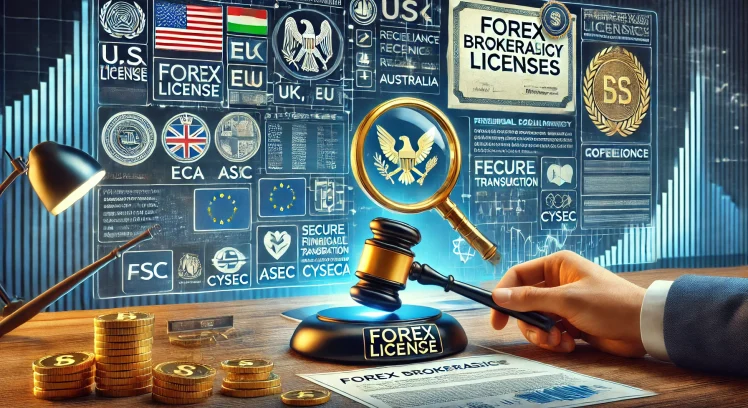




A Comprehensive Guide to Global Regulations and How to Verify a Broker’s Legitimacy
The foreign exchange (Forex) market is one of the most dynamic and liquid financial markets globally. With daily trading volumes exceeding $7.5 trillion, traders from around the world participate in currency trading. However, the high level of market participation also attracts fraudulent brokers and scams. As a result, Forex brokerage licenses exist to ensure transparency, security, and compliance with financial regulations.
This article provides a comprehensive breakdown of Forex brokerage licenses across different countries and offshore jurisdictions. We will also cover how to check whether a broker is regulated to avoid financial fraud.
Categories of Forex Brokerage Licenses
Forex brokers operate under different levels of regulation, depending on their licensing jurisdiction. Based on regulatory stringency, these licenses can be categorized into three tiers:
Tier-1 (Highly Trusted and Strictly Regulated)
These are the most reputable financial regulators, enforcing strict compliance rules to protect investors and ensure fair trading conditions.
- United States: Commodity Futures Trading Commission (CFTC) & National Futures Association (NFA)
- United Kingdom: Financial Conduct Authority (FCA)
- Canada: Investment Industry Regulatory Organization of Canada (IIROC)
- Australia: Australian Securities and Investments Commission (ASIC)
Tier-2 (Moderately Regulated)
These regulators maintain reasonable oversight, but their requirements may not be as strict as Tier-1 jurisdictions.
- UAE: Securities and Commodities Authority (SCA) & Dubai Financial Services Authority (DFSA)
- Bahamas: Securities Commission of the Bahamas (SCB)
- Belize: International Financial Services Commission (IFSC)
- Mauritius: Financial Services Commission (FSC)
- Seychelles: Financial Services Authority (FSA)
Tier-3 (Offshore and Lightly Regulated)
These jurisdictions impose minimal regulatory oversight, making them attractive for brokers seeking more operational freedom, such as high leverage and lower compliance costs. However, they offer limited trader protection.
- Cayman Islands: Cayman Islands Monetary Authority (CIMA)
- Marshall Islands: No official financial regulator
- St. Vincent & the Grenadines: Financial Services Authority (SVG FSA) (does not regulate Forex trading)
- Vanuatu: Vanuatu Financial Services Commission (VFSC)
Detailed Overview of Forex Brokerage Licenses by Country
1. United States (CFTC & NFA) – Tier-1
- The Commodity Futures Trading Commission (CFTC) and the National Futures Association (NFA) strictly regulate Forex brokers in the U.S.
- Brokers must maintain a minimum capital of $20 million.
- High restrictions on leverage (maximum 1:50 for retail traders).
- Strict client fund segregation and anti-money laundering (AML) policies.
🔍 How to Verify a U.S. Forex Broker:
- Visit the NFA’s website: www.nfa.futures.org
- Check if the broker has a valid NFA ID and CFTC registration.
2. United Kingdom (FCA) – Tier-1
- The Financial Conduct Authority (FCA) is one of the most respected regulators worldwide.
- Brokers must maintain a minimum capital of €730,000.
- Retail leverage is restricted to 1:30.
- Client funds must be held in segregated accounts.
🔍 How to Verify a UK Forex Broker:
- Visit the FCA Register: www.fca.org.uk
- Search using the broker’s name or FCA license number.
3. Canada (IIROC) – Tier-1
- The Investment Industry Regulatory Organization of Canada (IIROC) oversees Forex brokers.
- Brokers must meet high capital adequacy requirements.
- Retail traders face leverage caps of 1:50 or lower.
🔍 How to Verify a Canadian Forex Broker:
- Check the IIROC website: www.iiroc.ca
4. Australia (ASIC) – Tier-1
- The Australian Securities and Investments Commission (ASIC) regulates Forex brokers.
- Minimum capital requirement: $1 million AUD.
- Retail leverage is capped at 1:30.
- Brokers must have risk disclosure policies in place.
🔍 How to Verify an Australian Forex Broker:
- Visit the ASIC Register: www.asic.gov.au
5. United Arab Emirates (SCA & DFSA) – Tier-2
- The Securities and Commodities Authority (SCA) regulates mainland UAE brokers.
- The Dubai Financial Services Authority (DFSA) oversees brokers within the DIFC free zone.
- Brokers must adhere to strict AML and capital adequacy rules.
🔍 How to Verify a UAE Forex Broker:
- SCA: www.sca.gov.ae
- DFSA: www.dfsa.ae
6. Bahamas (SCB) – Tier-2
- The Securities Commission of the Bahamas (SCB) regulates Forex brokers.
- Brokers must follow AML/KYC regulations but enjoy operational flexibility.
🔍 Verification: Check www.scb.gov.bs
7. Belize (IFSC) – Tier-2
- The International Financial Services Commission (IFSC) regulates Belize Forex brokers.
- Minimum capital requirement is $500,000.
- Brokers offer high leverage up to 1:1000.
🔍 Verification: Check www.ifsc.gov.bz
8. Mauritius (FSC) – Tier-2
- The Financial Services Commission (FSC) issues Forex licenses.
- Brokers have moderate oversight but can offer higher leverage.
🔍 Verification: www.fscmauritius.org
9. Seychelles (FSA) – Tier-2
- The Financial Services Authority (FSA) oversees Forex brokers.
- Less stringent than FCA or ASIC but better than completely unregulated brokers.
🔍 Verification: www.fsaseychelles.sc
10. Cayman Islands (CIMA) – Tier-3
- The Cayman Islands Monetary Authority (CIMA) regulates Forex firms but imposes limited oversight.
🔍 Verification: www.cima.ky
11. Marshall Islands – Tier-3
- The Marshall Islands has no financial regulatory authority overseeing Forex brokers.
- Most brokers registered here are unregulated.
🔍 Verification: Not possible as no regulatory body exists.
12. St. Vincent & the Grenadines (SVG FSA) – Tier-3
- The Financial Services Authority (SVG FSA) registers Forex brokers but does not regulate trading activities.
🔍 Verification: www.svgfsa.com
13. Vanuatu (VFSC) – Tier-3
- The Vanuatu Financial Services Commission (VFSC) regulates brokers but provides minimal oversight.
- Brokers must have $50,000 minimum capital.
🔍 Verification: www.vfsc.vu
Final Thoughts
When choosing a Forex broker, always verify their license with the respective regulatory authority. Tier-1 regulators provide the highest protection, while offshore jurisdictions (Tier-3) carry higher risks. Trading with a regulated broker ensures safety, transparency, and protection against fraud.
By following these guidelines, traders can make informed decisions and avoid scams in the Forex market.